22/01/2010

How To Fish A Cat - A National Geographic Documentary

It's one of the many  interesting things about my new apartment block. We share the block with cats. They are allowed to enter the building as they wish, live there as long as they want. While feeding the stray cats is a common habit in this city - as matter  of fact it's an essential part of Istanbul's culture - I must admit I had never seen this nice tradition being taken to this extreme.


Anyway - I like cats; so no big deal despite the smell in the block.


Today, one of these cats sneaked into my apartment and found her way to my extremely small laundry room which has a corner in its end where a cat can perfectly fit in without being reached by any human being. 


At first I tried for many minutes to convince the extremely anxious cat to come out using my most charming voice to not much luck until the point I realized that the whole scene must be looking extremely bizarre. So I initiated the execution of plan B.


Right after this pic was taken, she ran back to her corner. Flashlight scared her a lot.


I went to the corner shop to get some frozen turkey döner. Here is what happened next:


Good bye Miss Cat. 


Nayu - Gevende

This song's lyrics are in Turkish but every single word is sung backwards giving the impression that it is written in a totally different language. Nayu - the title - actually stands for Uyan - meaning "Wake Up".

Amazing...

15/01/2010

About Morality

Is it possible that we created moral rules to only increase predictability in human behavior? We wanted to feel safe and for that we sacrificed on our own freedom for only to have a higher predictability on how other people would act under different conditions.


As Maslow's pyramid suggests, reaching a sense of safety has always been a top priority for us. Fear as it seems to me is the very base upon which we built our existence. In a sense fear is sister to existence or better to say fear is the anti existence. Because the moment we start to exist, we are born with a desire to survive, with a fear of not existing, of dying.


This base of fear diffuses to all parts of our developing lives - slowly and subtly. Also to our social relationships. We fear each other and this fear makes us to do the most stupid things.


I think Rumi had it all right (I hope he is - as these 4 lines sum up my life philosophy):


Keep walking, though there’s no place to get to. 
Don’t try to see through the distances. 
That’s not for human beings. 
Move within, but don’t move the way fear makes you move.


Instead of negotiating with and trying to understand what being a human is all about, to deal with the fear, we have been choosing the much easier path. We created rules to imprison ourselves and others; reference points where we could align human behavior to. But these very rules sometimes make us alienate ourselves.


Why I wrote is a duel scene I saw in Kubrick's Barry Lyndon. You see - until only couple of centuries ago, it was morally wrong to kill someone unless you invited the person to a duel. How graceful hypocrisy can get - eh?

02/01/2010

Re-thinking History

In this post, I had tried to describe a fundamental problem that I have been observing in us - the mankind where I attempted to explain how under the information bombardment of today, we sometimes tend to fall into the trap of not thinking and not questioning.


"..Especially in our age of communication, when I see how some thought patterns are prepared, packaged into easy to swallow thought tablettes to be consumed by public and served through public opinion channels worldwide is somewhat disappointing.


It's like these radioactive marker drugs they inject into your vein to see how your blood travels through your body; a thought is created and you see it travel from continent to continent, from country to country, from city to city, from neighborhood to neighborhood for years - without being questioned, without being re-thought, accepted as they arrive, used with confidence and pride in every intellectual conversation."


Ironically, technologies we used to create this environment are taking their roots without any exception from science and the idea of continuous questioning behind it. Yet, while science's products reach more and more people thanks to our consumption cycles, the philosophy behind it becomes more and more isolated to ever shrinking, privileged oligarchic structures.


In any second, pre-processed information is flowing from all around the world right to wherever we are in such quantity and frequency that we barely find the time to even only consume them. We rely on people who think for us, people who sum it all up and tell us what we should think about things.


We don't even need to go 20 years back in time to see how fundamentally amount of information we receive and share on a daily basis has increased. We tweet, we facebook, we google, we cnn, we bbc; we do many things to collect facts from and distribute to the world. Yet these "facts" are mostly products of a perception and rarely just simple facts. They are processed and prepared by individuals with an established paradigm to be served for the hunger of our already established perceptions.


Perceptions or paradigms more in general seem to have their own appetite. Just like we tend to favor a pizza as compared to celery, our paradigms seem to hunger for certain kind of information, certain kind of factual looking comments, not just the facts. Because, the idea is not to eat something good for our health and feel good in longer terms; the idea is to reach satisfaction as fast as possible through holding the hot, crispy crust and melted mozzarella. And today's information bombardment mostly plays on our need for junk food. Not on our civilization's health.


Come to think of it, none of the wars were caused by celery but almost all of them were caused by pizza.


We think we are talking about facts. But truth is we talk about someone else's truths. We fail to recognize how deceitful facts can be.


I truly believe that human kind is more open to influence than we think. I believe we tend to think human beings in general are close to influence so we find it easier (and more profitable for some of us) to milk them instead of trying to change them. Yet, mostly the problem arises only because we don't prepare environments to allow people's exposure to different ideas.


That's why, one of the three potential social responsibility (Like many other things, this phrase has been exploited so much for the sake of brand identities that it sounds miserably corporate) topics that I would want to work on in the future is improvement of the quality of social sciences education at primary and secondary schools.


Particularly in the context of history teaching, I have been trying to follow new developments. I'm happy to see that there are waves of improvement in many countries where the history books are being revised and much more importantly children are taught how to reason. Yet the efforts put are very slow and very small in their effects when compared with the realities out. Because mostly the books they are based on, the traditional history writing in short, is crippled.


A quite old article written by Stefanos Yerasimos (RIP) - a Greko-Turkish historian - had served as a great mind opener for me. In that particular article, we was mentioning how in history writing, events are used as an, what he calls, "Argument Library" where some historians tend to select arguments from this library to support THEIR VIEW they had ALREADY established and omit the rest sometimes to severely cripple the soul of mankind.


Like every fundamentalism, nationalism has its echo, its even more irrational anti thesis. So as long as there is no global effort to revolutionize our education systems, we will keep failing.


But when we are doing this, I doubt it that rationalism alone could help us out:


In the biographical documentary named "The Fog of War", Robert McNamara (US Secretary for Foreign Affairs during bloodiest Vietnam war days) tells us about 11 lessons he had extracted from his long life. And one of the most important one goes; "Lesson #2: Rationality will not save us."


The reason why I wrote all of these is actually remembering about this favorite paragraph of mine from Charlie Chaplin's wonderful autobiography (My Autobiography, Charlie Chaplin):


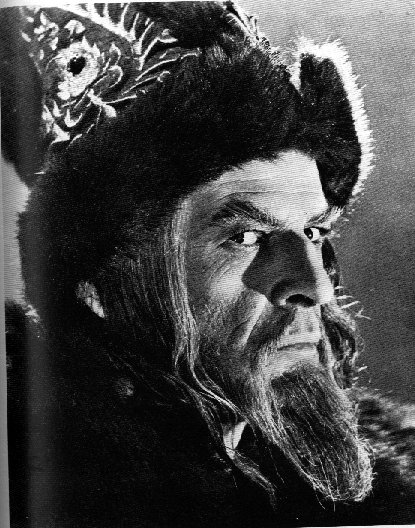
"...His (Eisenstein's) film Ivan the Terrible, which I saw after the second World war, was the acme of all historical pictures. He dealt with history poetically - an excellent way of dealing with it. When I realized how distorted even recent events have become, history as such only arouses my skepticism. Whereas a poetic interpretation achieves a general effect of the period. After all, there are more valid facts and details in works of art than there are in history books..."


Granted, I never could manage to like "Ivan The Terrible" and to deal with history and with today's events for that matter poetically sounds naive but Chaplin surely has a point. I wonder how he would have felt in today's world.


Of course, writing History and getting informed about today's actual realities are two different disciplines. But I think these two disciplines are affecting and feeding each other where particularly the latter one feeds the former one. I think in a way, set paradigms of today establishes the framework of history writing of tomorrow. 


29/12/2009

Vacuum of Non-Existence - 2

What made me try to imagine and write about my grandfather, Ejder’s death, was a series of important developments in my family and particularly an interesting anecdote that got refreshed on my memory after a recent family meeting. I don’t know why but most of the thoughts on my mind nowadays are about “The Family”.


I was only 40 days old when he died. Now looking back, during my early childhood that I spent in his apartment with my mother, aunts and widowed grandmother, they seemed to be living in a state of sad harmony with a continuous sense of supporting each other as if they were navigating through some crisis. Only I didn’t know what the crisis was all about by then apart from the very evident feeling of that emptiness that seemed to be sharing the apartment with us. It was like an invisible creature that would first provoke generation of emotions and then suck them all in like a black hole in an urge of survival of the family universe. It was the vacuum of his non-existence that he left behind in the family and the vacuum alone became my grandfather.


At first he was like a mystical myth. Stories told about him had left an impression of perfection on me and as my limited life experience by then wasn’t rich enough to allow me to question the hero concept, he became my hero. A clever intellectual who had marginal/mystical interests (namely, claiming to be a medium, an enthusiast of telekinesis and member of some esoteric organization), someone who wasn’t afraid to stand out. Growing more powerful on me with the help of this charismatic image, this emotion vacuum I grew up around, became something due to be filled in me during my teenage years.


Objects have helped a great deal in this quest. When I was 16, I started to smoke his pipe that I had found in his dusty closet of books to be still filled with the ashes of his last smoke. And when I was 18, I was given his watch which I’m still keeping today.


As I grew on though, stories told about him started to change. Perhaps it was only the length of time that had passed since his death. Or the urge the three sisters and their mother felt to come into peace with their past. But they started to dig out most private things even in our, their children’s presence. I always liked this openness in my greater family which I attribute to the female dominance in it. His weak sides started to appear as well among the ones of my grandmother.


As his perfect image started to decay, I started to feel even more connected to him. And perhaps most ironically, something else started to happen. Even though we didn't have much in common in the way we look, more and more cases started to occur, where older relatives would catch odd things like a look, a comment I would make upon a little thing, where they would say that they caught Ejder in me.


His vacuum became a teacher – a mentor if you will – for me, showing we are not supposed to be perfect and if we try to be perfect, we are doomed to lead a crippled life.


About 10 years ago, I came back from school to find a little red agenda lying on our dining table. It looked like as if it was beamed there from outer space. Its binding was quite worn but intact. With a great curiosity, I started to page through. It was more like a diary written by someone with a hard to read hand writing. Owner's name wasn't written.


I called my mother in awe to ask where it came from. She was still excited about the story: Apparently a week before, it was found in a second-hand bookstore by one of my aunt's rather strange friends who was into old books and diaries. He immediately recognized it to be my grandfather’s diary for by then his wife in future's, my now grandmother's name, Süverce, which was frequently mentioned in the diary is a really rare name. We don't believe there are more than a handful people with this name in Turkey. So thinking that she must be that Süverce, he brought it to my aunt which was then relayed to my mother.


"Ask for your grandmother's permission if you want to read" my mother said. I didn't listen to her. I perceived it to be a crucial document to understand my roots, not a document of privacy. I also felt that learning about private matters about my grandmother from 50 years ago wouldn't harm anyone or anything. Besides, even if she had allowed me to read it, she still could have felt bad about it. So without having the slightest bit of bad conscience I started to read.


I read about this young man who was about the same age as me when this encounter happened. He was apparently in love with his fiancée, Süverce, that was the most frequently mentioned figure in his diary. I read about their almost daily routine where he would pick up his sweetheart in the evening to go to movies together at Istiklal street - a street where 40 years later I would spend my high school days. Movie names, actors and actresses’ names were exclusively recorded. I read about his depression about working at his father's publishing house and his protest yet submissive style when describing his father's trips to strange places. Then about their moderate wedding and some other interesting details I won't disclose here.


At last, this was a direct contact to the owner of the vacuum.


The taste remained after that reading is still very vivid today. There are not many things in the world that is as fulfilling as to learn more about someone whose vacuum you have been used to. 


I believe to get to know someone is not strictly dependent on the amount of time we spend together. It is more like related to the depth of bondage you were able to build. In Ejder's case, I grew up around the vacuum of his non-existence which actually turned out to be as effective as his very existence. After all, the persons you love are not necessarily the ones you see most but the ones with whom you could connect and maintain that bondage.

09/12/2009

3 minutes over Istanbul

I came across this video when looking for multimedia art pieces about Istanbul. It is by far my favorite so far. Most of the images in it are more likely to be from early 80s. Things covered look different than they do now and of course things that developed at mind numbing pace in the last 20 years are missing. But the essential feeling about Istanbul and about being an Istanbullu is to be felt in here. I could at best describe it as a mystical sadness that could only be found in the joy of living. Like the lover far away.


16/11/2009

Vacuum of Non-Existence - 1


February in Istanbul can be strikingly cold. Temperatures rarely hit below zero, dominant northern winds and humidity swept from seas surrounding the city however make it nothing but painful to be outside especially at night time. It is such nights where you would rather stay at home to make some tea and appreciate the warmth of your home, perhaps watch TV, read a book or look through your window at deserted, wet streets, listening to sounds of a car or a rushing pedestrian rarely passing by.


It was a such cold night in 1978, when Ejder, a bald, chubby man at his mid 50's, was woken by a depressing feeling in his chest. He opened his eyes in the dark with an urge to put his point and middle fingers on his neck to feel his artery. The heart seemed to be beating fine. He checked with his hand on his wife sleeping by, seated himself in bed and listened to the cold silence of the sleeping apartment for a while. Then with a naughty hope that his restlessness might soothe if he grabbed a late night snack from the kitchen, he slowly stood up.


Trying to be as silent as possible, with clumsy steps he found his way to the hallway of the apartment which he found being bleakly illuminated by the reddish, heavy light that was oozing out of her eldest daughter's room. “Poor Mine” he thought to himself smiling and knocked on the door and opened it to find his daughter afoot trying to convince her newly born baby to sleep.


The young mother, Mine, was only 22 and it had been less than 6 months since she came back with a surprise baby in her womb along with a surprise fiancee holding her hand from Ankara where she actually was supposed to be studying engineering and not making babies.


Ejder remembered it very clearly the day they showed up in his apartment. He at first was shocked but then quite quickly he grew to like the imposed groom, a charming young man coming from a little, poor village in Thrace who was smart enough to make his way to the primary engineering school in the country despite his economical disadvantages. But why he liked his new son in law was mostly because he could convince himself he wasn’t class conscious, one of the many features in his character that he had developed as a passive aggressive reaction to his own father. He didn’t resist his father much openly when he had the chance but chose to be the opposite person instead to disappoint him. This was the way he was dealing with his dominant, highly individual, selfish, eccentric father.


The young lovers got married in a Blitz fashion before the belly became too visible and only one month after their surprising appearance, his daughter had to send her husband back to Ankara to finish his school.


Ejder walked in to caress Mine's tired head. He wanted to provide but also find some comfort. She however in all of her frustration, tiredness and loneliness in the absence of her husband wasn’t in a state to cope with such warmth. All she could think about was to put her son to sleep. She asked his father to leave her alone in an almost impudent, plaintive manner without even looking at him. Something she was going to regret for the rest of her life.


In slight disappointment, Ejder left her room and moved on through the dark hallway to kitchen. He opened the fridge door and stood in front of it for a while scratching his big belly in a sweet state of indecision. Then he took butter and jam out to prepare a slice of bread for himself. He quickly smeared the butter on the bread, spread the jam on it and took an impatient bite right there in the kitchen with a childish joy. There he felt it. The restlessness in his chest started to take shape of a sharp pain and grow to the point it felt suddenly as if something was trying to rip his ribcage open from inside.


Feeling utterly helpless, with the great pain, he tried to grab his heart, knelt down onto the kitchen floor first, then he laid down on his side. His eyes got fixed at the dust pile under the fridge he could see now. He made a last effort to scream her daughter’s name which was followed by another big blow coming out of his chest.
           
The panic air initiated by Mine invaded quickly the night in the house. All of his three daughters and his wife rushed into the kitchen waking up each other. All the screams, cries, efforts couldn't help and touch him anymore. Nevertheless, it was better not to be alone. He realized what was happening. A great fear coupled with a sadness captured his existence. “It is such an inappropriate time” he thought before giving in to pain that was pulling him away from his body.


 It all ended quickly. When the three young women and their mother realized they lost the father of the house, the loud panic melted into a silent grief that could only be caused by a deep shock. They just stayed in the kitchen, looking at his body with wet eyes. It felt like they were part of an imaginative death cult ritual for a while.


The baby crying from the back of the house brought them back to life. Sisters looked at each other with confused eyes. Mine left the kitchen to check on her son leaving her sisters, mother and death behind in the cold kitchen.


Invitation for Ejder Gulen Akisan's remembrance service to be conducted in Tesvikiye Mosque on March 18th. 1978, 40th. day after this death.