Next time you hug someone; think about this: Are you only hugging your not-loneliness or are you hugging another eternity? Physically it looks and feels the same - but to me there is a fundamental difference between the two where the latter is difficult to achieve and requires hard work.
Showing posts with label stupidlittlethoughts. Show all posts
Showing posts with label stupidlittlethoughts. Show all posts
15/03/2012

07/03/2012
Praying Poisoning Us?
I was never a religious person. What I was already finding awkward and suspicious as a child about religions, I could actually verify by reading about them and their history later on. Religions - especially the ones rooting from middle east - are to me clearly man made - or if I perhaps rephrase it more adequately it's basically a variety of human designed sets of rituals taking stage at different geographies to answer common substantial needs of human kind.
On the other hand, I don't consider myself an atheist. I like the idea that I'm in connection with universe. I feel and want to believe that I'm the center of my own universe - just like anybody or anything else. To me, the biggest challenge in life is not lose this connection between me and the "anti-me" which together make up the universe. Because if I do, it means I imprison myself into a dull, shallow, entirely and only biochemical equation.
In this wonderful blog entry, it is being mentioned about apparently renown astrophysicist Neil deGrasse Dyson's book and thoughts. In response to a question about the most astounding fact that he observed about universe, he gave this answer:
"...When I look up at the night sky and I know that, yes, we are part of this Universe, we are in this Universe, but perhaps more important than most of those facts is that the Universe is in us. When I reflect on that fact, I look up — many people feel small, because they’re small, the Universe is big — but I feel big, because my atoms came from those stars. There’s a level of connectivity — that’s really what you want in life. You want to feel connected, you want to feel relevant. You want to feel like you’re a participant in the goings on and activities and events around you. That’s precisely what we are, just by being alive.”
Now, let's keep these thoughts in mind - because what I'm going to say from here on can rather be provoking.
I'm thinking - if it is possible by sending our prayers to a god that we place not in us but "somewhere high in the heavens", in other words somewhere else in a single universe we all share, we take the first steps towards violence? Is it possible by wanting something for us or for our beloved ones from something that is not us (something that is not naturally part of us - quite in opposite, something we are subject of), we sow the seeds of destruction?
If you think, "classical" praying as we know, I mean, asking god "to do this", or "to spare that", "in return of being good kids", is a quite childish state of mind. In real life, only when we are spoilt children (or maybe when really old), we would be able to ask for things so relentlessly.
To me, as soon as spiritualism touches the foreign, that is anything that is not us, it brings discrimination with itself. The middle eastern tradition of monoteist religions, by placing a single god in the heavens and us his subjects in his universe, brings substential estrangement from our "anti-me"'s into our lives. Moreover, the fact that we place the god into the center of a single universe, we naturally have to define how distant or close each and every of us are to the center. Therefore it brings discrimination.
In a way, living in a single universe with a single god, things or beings that are not ourselves, are strangers. But if we came to believe that we all live in our own private universes, then things or beings that are not ourselves would be still part of our private universe, of our "anti-me".
That's why - I believe - this tradition's only solution to this problem is to unify people, to bring them together under one common god in order to stop this estrangement and discrimination.
Unifying and bringing people together sounds fine - eh? Well let's have a quick look at our wonderful history to find out what's been done to reach this aim: Crusades, Jihad, Inquisition Courts, Countless Pogroms, Genocide, Discrimination, Racism. Not to mention, the desire to suppress which is different.
But this desire, despite these countless flaws, functioned quite well so far; but with the rapid individualization of our societies, it is doomed to become weaker and weaker.
But if we could feel that we are living in union with universe, that we all are centers of our own personal universes, which is just one universe of billions of other universes, we could feel, rather than send to somewhere, our prayers in our hearts. We could then make praying a meditative state of mind and relate it with the peace of mind in ourselves.
In short - in my understanding - as soon as we place "the god" anywhere else but in ourselves, we lose contact with ourselves. I think, the vicious cycle that will cause the end or substantial change of "monoteist" religions is starting right there. And when this happens, we will need to find new ways to build our social structures on.
On the other hand, I don't consider myself an atheist. I like the idea that I'm in connection with universe. I feel and want to believe that I'm the center of my own universe - just like anybody or anything else. To me, the biggest challenge in life is not lose this connection between me and the "anti-me" which together make up the universe. Because if I do, it means I imprison myself into a dull, shallow, entirely and only biochemical equation.
In this wonderful blog entry, it is being mentioned about apparently renown astrophysicist Neil deGrasse Dyson's book and thoughts. In response to a question about the most astounding fact that he observed about universe, he gave this answer:
"...When I look up at the night sky and I know that, yes, we are part of this Universe, we are in this Universe, but perhaps more important than most of those facts is that the Universe is in us. When I reflect on that fact, I look up — many people feel small, because they’re small, the Universe is big — but I feel big, because my atoms came from those stars. There’s a level of connectivity — that’s really what you want in life. You want to feel connected, you want to feel relevant. You want to feel like you’re a participant in the goings on and activities and events around you. That’s precisely what we are, just by being alive.”
Now, let's keep these thoughts in mind - because what I'm going to say from here on can rather be provoking.
I'm thinking - if it is possible by sending our prayers to a god that we place not in us but "somewhere high in the heavens", in other words somewhere else in a single universe we all share, we take the first steps towards violence? Is it possible by wanting something for us or for our beloved ones from something that is not us (something that is not naturally part of us - quite in opposite, something we are subject of), we sow the seeds of destruction?
If you think, "classical" praying as we know, I mean, asking god "to do this", or "to spare that", "in return of being good kids", is a quite childish state of mind. In real life, only when we are spoilt children (or maybe when really old), we would be able to ask for things so relentlessly.
To me, as soon as spiritualism touches the foreign, that is anything that is not us, it brings discrimination with itself. The middle eastern tradition of monoteist religions, by placing a single god in the heavens and us his subjects in his universe, brings substential estrangement from our "anti-me"'s into our lives. Moreover, the fact that we place the god into the center of a single universe, we naturally have to define how distant or close each and every of us are to the center. Therefore it brings discrimination.
In a way, living in a single universe with a single god, things or beings that are not ourselves, are strangers. But if we came to believe that we all live in our own private universes, then things or beings that are not ourselves would be still part of our private universe, of our "anti-me".
That's why - I believe - this tradition's only solution to this problem is to unify people, to bring them together under one common god in order to stop this estrangement and discrimination.
Unifying and bringing people together sounds fine - eh? Well let's have a quick look at our wonderful history to find out what's been done to reach this aim: Crusades, Jihad, Inquisition Courts, Countless Pogroms, Genocide, Discrimination, Racism. Not to mention, the desire to suppress which is different.
But this desire, despite these countless flaws, functioned quite well so far; but with the rapid individualization of our societies, it is doomed to become weaker and weaker.
But if we could feel that we are living in union with universe, that we all are centers of our own personal universes, which is just one universe of billions of other universes, we could feel, rather than send to somewhere, our prayers in our hearts. We could then make praying a meditative state of mind and relate it with the peace of mind in ourselves.
In short - in my understanding - as soon as we place "the god" anywhere else but in ourselves, we lose contact with ourselves. I think, the vicious cycle that will cause the end or substantial change of "monoteist" religions is starting right there. And when this happens, we will need to find new ways to build our social structures on.
21/08/2011
Bonsai Tree Climbing

At first, the screen is dark.
Then slowly, out from the distances we start hearing sound of the quite murmuring and the occasional sniffing of people. Apparently it's crowded.
The screen is light now. You see me - standing in a courtyard of a worn out village house. With people all around me. Most of them are old - with extremely wrinkled faces and hands. They are farmers.
Why are they there? Why am I here?
A coffin near the coop. Its cover is open and there is a body of which we can only see an old woman's white, cold, little face. She is my grandmother who died the night before.
My grandfather is standing near me. As monumental as always. How can such a small man be of such charisma? His whole existence there radiates a sincere sadness to the courtyard; elegantly. Near him my father. With his red eyes. You can tell, he had cried. A childish expression on his face just like the other time I had seen him cry. Maybe no matter at what age, every man losing his mother is supposed to look childish.
When not handshaking with people to accept the condolences, I look at the house. At its poor walls. At its courtyard shadowed with grapevine leaves. At its simple and ugly wooden door. At my grandfather's tractor. At the sofa on its veranda. I'm amazed by their sizes, they are so small. They were all so mighty and big at the days where I would spend my summers in this village house as a city boy. As if my childhood shrank or as if I've walked away from it and now looking back.
Wind the clock back - only maybe 7 hours. Now stop.
It's me coming from some bar late in the night. I'm half smashed. Enter the apartment stumbling to find my phone blinking. Mom has called me maybe 10 times and then she left one of her famous short bad news messages. "your grandmother dead, call me." I call her to hear her protests that I'm not at easy reach when needed. We make an appointment to meet in the morning and drive to the village together then we hang up.
After the short hassle, I look at the walls. It's quite. I can hear the buzzing of the street light near my window. I feel guilty for a moment to have fun at the minutes when my grandmother was dying. But it quickly passes. I put myself onto the bed, set the alarm clock and close my eyes. With all the alcohol in my blood, the world is turning.
Only then I come to realize the feeling that captivated me as soon as I heard the news from my mother. And two tears find their way out of my closed eye lids and roll down to my ears. Before falling asleep I murmur: "It's so difficult to say goodbye to your childhood."
Now wind the clock further back - 5 years maybe. We are looking for a scene where we are eating with my father - without my mother being present drinking Raki - there aren't many such moments. So it should be easy to find. Now - stop.
I took you here because this is the day where I first saw my father cry. Over a woman - of course. Over my mother. It feels to me, the moment you see your father cry for the first time, is a turning point in your life. It's one of the clear indications that you are saying goodbye to your childhood. It is the moment where you realize you are about to enter a world without superheros, saviors and miracles. That is of course if you are not a religious person. There's always something childish about being religious.
 Now at this courtyard, near my grandmother's dead body, feeling utterly lonesome in between people, my gaze sneaks away to the mulberry tree standing on its own in the backyard of the house. I let my eyes dance with the tree to share its remote peace.
I remember that some of my childhood's biggest adventures involved climbing on it, finding my way through its branches which seemed to be endless then. I would day-dream that I was an explorer trying to find his way through some jungle. Of course every once in a while, usually seconds before dropping dead because of starvation, the explorer would find a delicious fruit to find the energy to carry on.
Also the mulberry tree shrank. Strange - it looks almost like a bonsai tree to me now. From a distance, every tree looks like a bonsai tree if you walk away far enough from it in - be it distance, feeling or time.
I find myself secretly smiling thinking about the bonsai trees I'm climbing at the current stage of my life.
Little bit of humor, dead body of my grandmother, memories about my childhood. When they come together, you momentarily realize that there are very few things to take seriously in this life. And this blog entry isn't one.

Little bit of humor, dead body of my grandmother, memories about my childhood. When they come together, you momentarily realize that there are very few things to take seriously in this life. And this blog entry isn't one.

02/04/2011
YOU Killing YOUR Half
 |
| http://www.innerlocusart.com/comfort.html |
You set out for a walk in the forest with your dwarfs. You find a little lake in between the trees. You lean to water surface with a narcissistic desire to see your image in the middle of leafs' vivid green reflecting.
Your reflection is looking at you with a childishly curious expression. You look back at it with a cold expression in your long face. Your eyes are bubbling with indifference - an indifference which could
quieten any sound.
You want it to be dead. Your reflection - you want it to be dead. Your other part - you want it to be dead. You are taken by the illusion that if you do so, you'll feel a wild pleasure which should be exclusive to sophisticated vandals; barbars of great taste. You feel like if you kill it, you'll become a piece of puzzle that will fit in perfectly.
You wait leaning to water. You look at your reflection. You wonder how long more it will take until your image in water finally drowns. You feel that a masochistic pleasure is starting to grow in you - almost something sexual. You keep looking at it. You keep looking until you once again realize you'll never be free of it. You say "fuck it" and turn away. So does it.
09/08/2010
Blurry Picture of The Beautiful Day
The moment you realize you are facing with beauty is the moment where you feel like a new born into a different reality. Like a baby with instincts to breathe or reach out for mother, we open up ourselves to a momentary grasp of eternity.


It is like to have a slight and curious look into a train rapidly passing by - seeing inside but not having the means to understand what it's really like inside. The beauty is a window opening to eternity remaining open for just a tantalizing moment. But even that little dose of eternity you capture through it, makes you a little richer.

Pain - in this sense - can be beautiful, because the true beauty of a thing lies in the way it is capable to wound our souls. Like titches on faces or scars on hands, a soul with its new wounds obtains new meanings or depths. Every wound uncovers a new unknown to discover. The beauty of a thing lies in its capacity to make us feel lost but at home - at the same time.
A beautiful thing infects our beings and that infection never leaves us again. It circulates - in words we utter, in thoughts we create; traces of that infection will be evident.
When living the beautiful day, there is a point you realize you're being infected. You look around with a humble awe. There is no yearning, there is no missing; you are one with who are missing.
From behind the camera, the beautiful day is something to be documented sometimes at the expense of not experiencing it. Its rarity inflicts an unsuppressable inspiration to capture it. The desire is to imprison the feeling on a piece of paper in such a way that it radiates a feeling of completeness, to make the eye the witness of a state of unity. Unity through the empathy with the one who experienced it but also in the sense it makes the viewer feel the unity with life.
It is like taking the picture of that tantalizing short moment where window into eternity stays open and perhaps because of this very ambition, the photographer is doomed to fail when it comes to share it with others.

But sometimes the picture of the beautiful day becomes a personal beauty for the one who is taking it; a personal description that is inspired by the tension between the beauty and his alienated machine is born.
The beautiful thing is a like star in otherwise dark skies. So no matter how you look for it, the question maybe is this:
The beautiful thing is a like star in otherwise dark skies. So no matter how you look for it, the question maybe is this:
How bright will our skies be when we watch it in our last breath?
"...A true philosopher, Spinoza believed, would cultivate what he called intuitive knowledge, a flash of insight that fused all the information he had acquired discursively and which was an experience of what Spinoza believed to be God. He called this experience "beatitude"..."
from "The Battle for God" / Karen Armstrong


31/05/2010
How Istanbul Feels To An Istanbullu Man
I think for a man, there is a strong sense of wisdom in kissing a not spotlessly beautiful woman. How life wears a woman's body, the faults and even more, how she handles these; her fragility makes a woman attractive.
If Istanbul is the chubby, middle aged next door woman with large breasts, then -say- Paris is the photo-shopped beauty on the cover of Sports Illustrated - in a continuous state of narcissistic masturbation.

If Istanbul is the chubby, middle aged next door woman with large breasts, then -say- Paris is the photo-shopped beauty on the cover of Sports Illustrated - in a continuous state of narcissistic masturbation.
If there is no other woman in the world when you're making love, then you know you are in love and probably being loved - this way or another. And at some point, as irrational as it is, if the city you live in is the most beautiful city in the world to you; then you know you truly live in that city and that city, I assure you, is and will be breathing with you - wherever you are.
Picture from Ara Güler.
30/05/2010
IG Nobel Prizes
IG Nobel Prizes is an actual scientific award that was designed around a very interesting concept.
Wikipedia's definition is:
"The Ig Nobel Prizes are an American parody of the Nobel Prizes and are given each year in early October for ten achievements that "first make people laugh, and then make them think".
... Ten prizes are awarded each year in many categories, including the Nobel Prize categories of physics, chemistry, physiology/medicine, literature, and peace, but also other categories such as public health, engineering, biology, and interdisciplinary research. With the exception of three prizes in the first year (Administratium, Josiah Carberry, and Paul DeFanti), the Ig Nobel Prizes are for genuine achievements."

I think this approach - I mean - bringing humor into the area of science is something we deeply need. Because somewhere I think, without humor, we tend to decay; things where humor isn't involved tend to become inhumane.
And here is my favorite research topic that was awarded in 2008:
ECONOMICS PRIZE. Geoffrey Miller, Joshua Tybur and Brent Jordan of the University of New Mexico, USA, for discovering that professional lap dancers earn higher tips when they are ovulating.
Makes sense - eh?
Wikipedia's definition is:
"The Ig Nobel Prizes are an American parody of the Nobel Prizes and are given each year in early October for ten achievements that "first make people laugh, and then make them think".
... Ten prizes are awarded each year in many categories, including the Nobel Prize categories of physics, chemistry, physiology/medicine, literature, and peace, but also other categories such as public health, engineering, biology, and interdisciplinary research. With the exception of three prizes in the first year (Administratium, Josiah Carberry, and Paul DeFanti), the Ig Nobel Prizes are for genuine achievements."

I think this approach - I mean - bringing humor into the area of science is something we deeply need. Because somewhere I think, without humor, we tend to decay; things where humor isn't involved tend to become inhumane.
And here is my favorite research topic that was awarded in 2008:
ECONOMICS PRIZE. Geoffrey Miller, Joshua Tybur and Brent Jordan of the University of New Mexico, USA, for discovering that professional lap dancers earn higher tips when they are ovulating.
Makes sense - eh?
29/05/2010
Not Being Able to Present The Turkish Identity In Eurovision
(This discussion on Eksi Sozluk was opened to criticize Turkey's entry selection for Eurovision.)
Assuming that Eurovision is really a place to present an identity - an interesting thought though I must say -, right away, the question that comes to one's mind is what Turkish identity that is not well presented in Eurovision is like. We, as a nation, love to live at the peaks of a reactionary attitude. But, don't you think that slowly we need to start to understand that this land we live in has a history and that we didn't land here from space or even more absurdly from Central Asia? Our essence is a mixture. Only 7% of our genetic pool is originated from Central Asia while around 30% is from Middle East and another around 30% is from Europe.
We have made ourselves so deeply condition that we Turks have to be the center of the world, that we are a very special race crowned by the contemporary fact that we are a Muslim nation, we tend not to understand or see that we are owners of this also in terms of civilizations highly fertile land . Being cut from history other than the official one, we tend to forget what really matters is the LAND. Cultures flourishing on it don't vanish but only change form by interacting with each other. Have no illusions: We are Urartu, we are Hittite, we are Sumer, we are Persia, we are Antic Greece, we are Troi, we are Byzantine, we are Armenia, we are Seldjuk and we are Ottoman.
With this certain stupid idea what a real Turk is like (encoded by official and still too nationalistically oriented education system) in our head, we struggle to find whether we fit into that image. But the minute we try to fit ourselves into something is the actual moment where we put a distance to our true selves.
Manga, Mor ve Ötesi, Hadise, Kenan Dogulu - all of these artists are rooted from this land. They grew up here and they were loved here.They are PART of this land. They reflect this land. Without any complexes they should be accepted.
And if really needed - I don't see why we should it need it though - we shouldn't refrain from looking directly into the eyes of our sarcastic foreign friends and say "hey - we are this, I don't fucking care about the rest, really."
Don't think we are pure. Nobody actually is. But living up to the idea that we are mixture can be really nice - creative, passionate, joyful. And we have an opportunity where we could realize this state of mind more easily than most of the other nation states.
Assuming that Eurovision is really a place to present an identity - an interesting thought though I must say -, right away, the question that comes to one's mind is what Turkish identity that is not well presented in Eurovision is like. We, as a nation, love to live at the peaks of a reactionary attitude. But, don't you think that slowly we need to start to understand that this land we live in has a history and that we didn't land here from space or even more absurdly from Central Asia? Our essence is a mixture. Only 7% of our genetic pool is originated from Central Asia while around 30% is from Middle East and another around 30% is from Europe.
We have made ourselves so deeply condition that we Turks have to be the center of the world, that we are a very special race crowned by the contemporary fact that we are a Muslim nation, we tend not to understand or see that we are owners of this also in terms of civilizations highly fertile land . Being cut from history other than the official one, we tend to forget what really matters is the LAND. Cultures flourishing on it don't vanish but only change form by interacting with each other. Have no illusions: We are Urartu, we are Hittite, we are Sumer, we are Persia, we are Antic Greece, we are Troi, we are Byzantine, we are Armenia, we are Seldjuk and we are Ottoman.
With this certain stupid idea what a real Turk is like (encoded by official and still too nationalistically oriented education system) in our head, we struggle to find whether we fit into that image. But the minute we try to fit ourselves into something is the actual moment where we put a distance to our true selves.
Manga, Mor ve Ötesi, Hadise, Kenan Dogulu - all of these artists are rooted from this land. They grew up here and they were loved here.They are PART of this land. They reflect this land. Without any complexes they should be accepted.
And if really needed - I don't see why we should it need it though - we shouldn't refrain from looking directly into the eyes of our sarcastic foreign friends and say "hey - we are this, I don't fucking care about the rest, really."
Don't think we are pure. Nobody actually is. But living up to the idea that we are mixture can be really nice - creative, passionate, joyful. And we have an opportunity where we could realize this state of mind more easily than most of the other nation states.
27/05/2010
Armenians Killed 519.000 Turks
A sentence designed to continue like this: "... therefore incidents where 1.5 Million Armenians were killed cannot be called a genocide."

Numbers quoted might be correct or not. Incidents that happened could be called a genocide or not - this actually isn't the point. Far from it. But the claim that the suffering party has to be 100% the victim like in the Holocaust to call it a genocide is utterly foolish to me.
In the end, while until only 100 years ago, "Kurds, Armenians, Turks etc." lived in this land, now "Kurds, Turks etc." live. Find the difference between the two pictures.

15/01/2010
About Morality
Is it possible that we created moral rules to only increase predictability in human behavior? We wanted to feel safe and for that we sacrificed on our own freedom for only to have a higher predictability on how other people would act under different conditions.
As Maslow's pyramid suggests, reaching a sense of safety has always been a top priority for us. Fear as it seems to me is the very base upon which we built our existence. In a sense fear is sister to existence or better to say fear is the anti existence. Because the moment we start to exist, we are born with a desire to survive, with a fear of not existing, of dying.

This base of fear diffuses to all parts of our developing lives - slowly and subtly. Also to our social relationships. We fear each other and this fear makes us to do the most stupid things.
I think Rumi had it all right (I hope he is - as these 4 lines sum up my life philosophy):
Keep walking, though there’s no place to get to.
Don’t try to see through the distances.
That’s not for human beings.
Move within, but don’t move the way fear makes you move.
Instead of negotiating with and trying to understand what being a human is all about, to deal with the fear, we have been choosing the much easier path. We created rules to imprison ourselves and others; reference points where we could align human behavior to. But these very rules sometimes make us alienate ourselves.
Why I wrote is a duel scene I saw in Kubrick's Barry Lyndon. You see - until only couple of centuries ago, it was morally wrong to kill someone unless you invited the person to a duel. How graceful hypocrisy can get - eh?
As Maslow's pyramid suggests, reaching a sense of safety has always been a top priority for us. Fear as it seems to me is the very base upon which we built our existence. In a sense fear is sister to existence or better to say fear is the anti existence. Because the moment we start to exist, we are born with a desire to survive, with a fear of not existing, of dying.
This base of fear diffuses to all parts of our developing lives - slowly and subtly. Also to our social relationships. We fear each other and this fear makes us to do the most stupid things.
I think Rumi had it all right (I hope he is - as these 4 lines sum up my life philosophy):
Keep walking, though there’s no place to get to.
Don’t try to see through the distances.
That’s not for human beings.
Move within, but don’t move the way fear makes you move.
Instead of negotiating with and trying to understand what being a human is all about, to deal with the fear, we have been choosing the much easier path. We created rules to imprison ourselves and others; reference points where we could align human behavior to. But these very rules sometimes make us alienate ourselves.
Why I wrote is a duel scene I saw in Kubrick's Barry Lyndon. You see - until only couple of centuries ago, it was morally wrong to kill someone unless you invited the person to a duel. How graceful hypocrisy can get - eh?
02/01/2010
Re-thinking History
In this post, I had tried to describe a fundamental problem that I have been observing in us - the mankind where I attempted to explain how under the information bombardment of today, we sometimes tend to fall into the trap of not thinking and not questioning.
"..Especially in our age of communication, when I see how some thought patterns are prepared, packaged into easy to swallow thought tablettes to be consumed by public and served through public opinion channels worldwide is somewhat disappointing.
It's like these radioactive marker drugs they inject into your vein to see how your blood travels through your body; a thought is created and you see it travel from continent to continent, from country to country, from city to city, from neighborhood to neighborhood for years - without being questioned, without being re-thought, accepted as they arrive, used with confidence and pride in every intellectual conversation."
Ironically, technologies we used to create this environment are taking their roots without any exception from science and the idea of continuous questioning behind it. Yet, while science's products reach more and more people thanks to our consumption cycles, the philosophy behind it becomes more and more isolated to ever shrinking, privileged oligarchic structures.
In any second, pre-processed information is flowing from all around the world right to wherever we are in such quantity and frequency that we barely find the time to even only consume them. We rely on people who think for us, people who sum it all up and tell us what we should think about things.
We don't even need to go 20 years back in time to see how fundamentally amount of information we receive and share on a daily basis has increased. We tweet, we facebook, we google, we cnn, we bbc; we do many things to collect facts from and distribute to the world. Yet these "facts" are mostly products of a perception and rarely just simple facts. They are processed and prepared by individuals with an established paradigm to be served for the hunger of our already established perceptions.
Perceptions or paradigms more in general seem to have their own appetite. Just like we tend to favor a pizza as compared to celery, our paradigms seem to hunger for certain kind of information, certain kind of factual looking comments, not just the facts. Because, the idea is not to eat something good for our health and feel good in longer terms; the idea is to reach satisfaction as fast as possible through holding the hot, crispy crust and melted mozzarella. And today's information bombardment mostly plays on our need for junk food. Not on our civilization's health.
Come to think of it, none of the wars were caused by celery but almost all of them were caused by pizza.
We think we are talking about facts. But truth is we talk about someone else's truths. We fail to recognize how deceitful facts can be.
I truly believe that human kind is more open to influence than we think. I believe we tend to think human beings in general are close to influence so we find it easier (and more profitable for some of us) to milk them instead of trying to change them. Yet, mostly the problem arises only because we don't prepare environments to allow people's exposure to different ideas.
That's why, one of the three potential social responsibility (Like many other things, this phrase has been exploited so much for the sake of brand identities that it sounds miserably corporate) topics that I would want to work on in the future is improvement of the quality of social sciences education at primary and secondary schools.
Particularly in the context of history teaching, I have been trying to follow new developments. I'm happy to see that there are waves of improvement in many countries where the history books are being revised and much more importantly children are taught how to reason. Yet the efforts put are very slow and very small in their effects when compared with the realities out. Because mostly the books they are based on, the traditional history writing in short, is crippled.
 A quite old article written by Stefanos Yerasimos (RIP) - a Greko-Turkish historian - had served as a great mind opener for me. In that particular article, we was mentioning how in history writing, events are used as an, what he calls, "Argument Library" where some historians tend to select arguments from this library to support THEIR VIEW they had ALREADY established and omit the rest sometimes to severely cripple the soul of mankind.
Like every fundamentalism, nationalism has its echo, its even more irrational anti thesis. So as long as there is no global effort to revolutionize our education systems, we will keep failing.
But when we are doing this, I doubt it that rationalism alone could help us out:
In the biographical documentary named "The Fog of War", Robert McNamara (US Secretary for Foreign Affairs during bloodiest Vietnam war days) tells us about 11 lessons he had extracted from his long life. And one of the most important one goes; "Lesson #2: Rationality will not save us."
The reason why I wrote all of these is actually remembering about this favorite paragraph of mine from Charlie Chaplin's wonderful autobiography (My Autobiography, Charlie Chaplin):

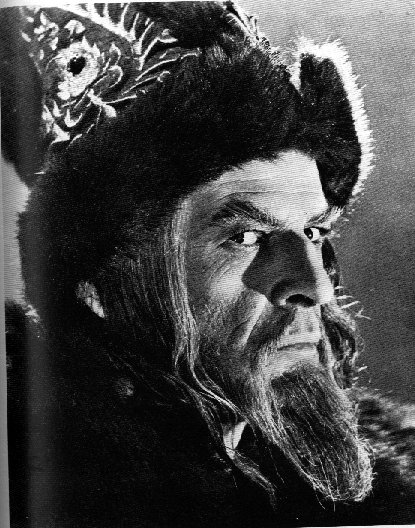
"...His (Eisenstein's) film Ivan the Terrible, which I saw after the second World war, was the acme of all historical pictures. He dealt with history poetically - an excellent way of dealing with it. When I realized how distorted even recent events have become, history as such only arouses my skepticism. Whereas a poetic interpretation achieves a general effect of the period. After all, there are more valid facts and details in works of art than there are in history books..."
Granted, I never could manage to like "Ivan The Terrible" and to deal with history and with today's events for that matter poetically sounds naive but Chaplin surely has a point. I wonder how he would have felt in today's world.
Of course, writing History and getting informed about today's actual realities are two different disciplines. But I think these two disciplines are affecting and feeding each other where particularly the latter one feeds the former one. I think in a way, set paradigms of today establishes the framework of history writing of tomorrow.

"..Especially in our age of communication, when I see how some thought patterns are prepared, packaged into easy to swallow thought tablettes to be consumed by public and served through public opinion channels worldwide is somewhat disappointing.
It's like these radioactive marker drugs they inject into your vein to see how your blood travels through your body; a thought is created and you see it travel from continent to continent, from country to country, from city to city, from neighborhood to neighborhood for years - without being questioned, without being re-thought, accepted as they arrive, used with confidence and pride in every intellectual conversation."
Ironically, technologies we used to create this environment are taking their roots without any exception from science and the idea of continuous questioning behind it. Yet, while science's products reach more and more people thanks to our consumption cycles, the philosophy behind it becomes more and more isolated to ever shrinking, privileged oligarchic structures.
In any second, pre-processed information is flowing from all around the world right to wherever we are in such quantity and frequency that we barely find the time to even only consume them. We rely on people who think for us, people who sum it all up and tell us what we should think about things.
We don't even need to go 20 years back in time to see how fundamentally amount of information we receive and share on a daily basis has increased. We tweet, we facebook, we google, we cnn, we bbc; we do many things to collect facts from and distribute to the world. Yet these "facts" are mostly products of a perception and rarely just simple facts. They are processed and prepared by individuals with an established paradigm to be served for the hunger of our already established perceptions.
Perceptions or paradigms more in general seem to have their own appetite. Just like we tend to favor a pizza as compared to celery, our paradigms seem to hunger for certain kind of information, certain kind of factual looking comments, not just the facts. Because, the idea is not to eat something good for our health and feel good in longer terms; the idea is to reach satisfaction as fast as possible through holding the hot, crispy crust and melted mozzarella. And today's information bombardment mostly plays on our need for junk food. Not on our civilization's health.
Come to think of it, none of the wars were caused by celery but almost all of them were caused by pizza.
We think we are talking about facts. But truth is we talk about someone else's truths. We fail to recognize how deceitful facts can be.
I truly believe that human kind is more open to influence than we think. I believe we tend to think human beings in general are close to influence so we find it easier (and more profitable for some of us) to milk them instead of trying to change them. Yet, mostly the problem arises only because we don't prepare environments to allow people's exposure to different ideas.
That's why, one of the three potential social responsibility (Like many other things, this phrase has been exploited so much for the sake of brand identities that it sounds miserably corporate) topics that I would want to work on in the future is improvement of the quality of social sciences education at primary and secondary schools.
Particularly in the context of history teaching, I have been trying to follow new developments. I'm happy to see that there are waves of improvement in many countries where the history books are being revised and much more importantly children are taught how to reason. Yet the efforts put are very slow and very small in their effects when compared with the realities out. Because mostly the books they are based on, the traditional history writing in short, is crippled.
A quite old article written by Stefanos Yerasimos (RIP) - a Greko-Turkish historian - had served as a great mind opener for me. In that particular article, we was mentioning how in history writing, events are used as an, what he calls, "Argument Library" where some historians tend to select arguments from this library to support THEIR VIEW they had ALREADY established and omit the rest sometimes to severely cripple the soul of mankind.Like every fundamentalism, nationalism has its echo, its even more irrational anti thesis. So as long as there is no global effort to revolutionize our education systems, we will keep failing.
But when we are doing this, I doubt it that rationalism alone could help us out:
In the biographical documentary named "The Fog of War", Robert McNamara (US Secretary for Foreign Affairs during bloodiest Vietnam war days) tells us about 11 lessons he had extracted from his long life. And one of the most important one goes; "Lesson #2: Rationality will not save us."
The reason why I wrote all of these is actually remembering about this favorite paragraph of mine from Charlie Chaplin's wonderful autobiography (My Autobiography, Charlie Chaplin):
"...His (Eisenstein's) film Ivan the Terrible, which I saw after the second World war, was the acme of all historical pictures. He dealt with history poetically - an excellent way of dealing with it. When I realized how distorted even recent events have become, history as such only arouses my skepticism. Whereas a poetic interpretation achieves a general effect of the period. After all, there are more valid facts and details in works of art than there are in history books..."
Granted, I never could manage to like "Ivan The Terrible" and to deal with history and with today's events for that matter poetically sounds naive but Chaplin surely has a point. I wonder how he would have felt in today's world.
Of course, writing History and getting informed about today's actual realities are two different disciplines. But I think these two disciplines are affecting and feeding each other where particularly the latter one feeds the former one. I think in a way, set paradigms of today establishes the framework of history writing of tomorrow.
06/10/2009
Tiny Bit of Heaven
You get seated at your desk to work in the silence of the night, see some chocolate left from the night before on the table. You light up a cigarette, inhale the smoke and throw the piece of chocolate into your mouth. As it dissolves on your tongue, being needled by a sweet restlessness, you look around. Something is missing; just a sip of coffee would suffice, you think, but kitchen is too far away. There you see the mug you had your morning coffee from. Tiny bit of sip of cold coffee is still left in it. You drink it to hold and let it dance with other sour tastes in your month. For a little while, you are complete in simplicity. You just had tiny bit of heaven.
19/09/2009
Confrontation with a Jew
Sounds like a title coming from a Nazi officer's wartime diary but no the title is today mine. As discriminative as it sounds, the type of conversation I had with a Jewish fellow couple of weeks ago justifies this title as we had the opportunity to discuss some of the tragedies the Turkish-Jewish diaspora had to face coming from the Turkish governments in the last 80 years particularly during 1940's and 1950's.

Bit of a background first;
Of course - if you look at the surface Turks love the Jews. First of all, an average Turk couldn't care less that Jesus was betrayed by a Jew and for that matter, quite frankly for Jesus himself.
Secondly when the catholic crown in Spain looked for places to dump them in 1492, only two places in Europe were willing to accept them; Amsterdam and Ottoman Empire's trade cities including Istanbul and Thessaloniki. It is said when Sultan Beyazit 2nd. heard about the news, he said something in effect; "Ye call Ferdinand a wise king he who makes his land poor and ours rich!" He was very right especially when you considered that the Jewish population was known to be very good in trade.
_the_flagship_of_Kemal_Reis.jpg) This pragmatic approach - actually found in every successful empire in history and today's world - ensured a peaceful habitat for Jews in Ottoman Empire to show their magic.Indeed until the beginning of 20th. century, they became an essential nation in the Empire. Of course, we are not talking about type of daily life we would encounter in today's world where regular Ottoman Jews and Muslim Turks meetup in the corner shop for a drink to wash down the daily stress. In fact, until the beginning for 20th. century very few Jews spoke Turkish. They had their own districts in the city (not Ghettos - Mahalles in Turkish meaning simply district) which they rarely needed to leave. In 18th. century Istanbul which was crazily cosmopolitan, this was the way cospolitanism was experienced.
This pragmatic approach - actually found in every successful empire in history and today's world - ensured a peaceful habitat for Jews in Ottoman Empire to show their magic.Indeed until the beginning of 20th. century, they became an essential nation in the Empire. Of course, we are not talking about type of daily life we would encounter in today's world where regular Ottoman Jews and Muslim Turks meetup in the corner shop for a drink to wash down the daily stress. In fact, until the beginning for 20th. century very few Jews spoke Turkish. They had their own districts in the city (not Ghettos - Mahalles in Turkish meaning simply district) which they rarely needed to leave. In 18th. century Istanbul which was crazily cosmopolitan, this was the way cospolitanism was experienced.
Then when in early 20th. century, as the nation state transformation took pace in the region, unpleasant incidents started to occur against the Jews as well. Although we could safely say that when compared to tragedies what Ottoman Greeks and Armenians had to face, what Jews had to deal with was softer.
Coming back to present; I was at my good mate's wedding coctail where the majority was Jewish. I didn't have any other friends and so I started to gulp down margaritas after margaritas until the point I realized that a little, at his well above 60s, white haired, partially bald, chubby man in his funnily looking white suite was on his own as well. He was checking people around with a shy attitude and was occasionally answering greetings sent over to him from far away corners of the room by shaking his head or slightly raising his glass.
We came eye to eye, smiling at him I walked over and said "you are too handsome to be so bored." No - this isn't how it happened and I haven't turned gay yet; neither do I use such terrible pick-up lines.
We got started talking about daily stuff. He immediately understood that I wasn't Jewish whereas I immediately understood that he was Jewish. Our initially polite and distant conversation developed quickly thanks to my sometimes a bit too direct or even impudent style. I asked him about his first hand experiences at incidents such as the Wealth Tax and September 6-7 1955 incidents; two major sins in the Turkish Republic's short history.

Now, you should know that these are still delicate issues in Turkey. An average Turk thinks he is not racist. He sees racism as a western notion and ignoring the very western transformation his own country has been experiencing from an empire to a nation state, he argues that the Ottoman Empire didn't have any racist history and therefore Turks are exempt from racism. To support this, he gives examples of Ottoman Empire's Milletler or Nations System - an indeed brilliant system for its time. This in the past living, self protection mechanism however prevents him from dealing with phenomena that are actually very evident in today's life including racism. Therefore he prefers to ignore related shameful acts from his own history as if they never happened and shows strong reaction when they are brought up. The reaction is mostly fueled by a sense of deep insecurity.
What I found particularly encouraging were his direct and honest responses that he gave looking directly into my eyes, recognizing the state's and for that matter at that time young nation's direct responsibility. His confidence made me realize with the help of all the movies made and public discussions hold things were changing.
I had been trying to face and come into peace with these actions by reading and by trying to remotely empathize with victims. But this was the first time I could find a real opportunity to actually discuss these face to face with a victim. I chatted with him to learn as many details as I could learn from him where I realized with every detail I could catch, I was becoming freer in a sense my ties with a nation in a nationalist sense was weakening but with the humanity strengthening.
We talked for an hour and in the end we toasted to the human; the sometimes most horrible animal.

Bit of a background first;
Of course - if you look at the surface Turks love the Jews. First of all, an average Turk couldn't care less that Jesus was betrayed by a Jew and for that matter, quite frankly for Jesus himself.
Secondly when the catholic crown in Spain looked for places to dump them in 1492, only two places in Europe were willing to accept them; Amsterdam and Ottoman Empire's trade cities including Istanbul and Thessaloniki. It is said when Sultan Beyazit 2nd. heard about the news, he said something in effect; "Ye call Ferdinand a wise king he who makes his land poor and ours rich!" He was very right especially when you considered that the Jewish population was known to be very good in trade.
_the_flagship_of_Kemal_Reis.jpg) This pragmatic approach - actually found in every successful empire in history and today's world - ensured a peaceful habitat for Jews in Ottoman Empire to show their magic.Indeed until the beginning of 20th. century, they became an essential nation in the Empire. Of course, we are not talking about type of daily life we would encounter in today's world where regular Ottoman Jews and Muslim Turks meetup in the corner shop for a drink to wash down the daily stress. In fact, until the beginning for 20th. century very few Jews spoke Turkish. They had their own districts in the city (not Ghettos - Mahalles in Turkish meaning simply district) which they rarely needed to leave. In 18th. century Istanbul which was crazily cosmopolitan, this was the way cospolitanism was experienced.
This pragmatic approach - actually found in every successful empire in history and today's world - ensured a peaceful habitat for Jews in Ottoman Empire to show their magic.Indeed until the beginning of 20th. century, they became an essential nation in the Empire. Of course, we are not talking about type of daily life we would encounter in today's world where regular Ottoman Jews and Muslim Turks meetup in the corner shop for a drink to wash down the daily stress. In fact, until the beginning for 20th. century very few Jews spoke Turkish. They had their own districts in the city (not Ghettos - Mahalles in Turkish meaning simply district) which they rarely needed to leave. In 18th. century Istanbul which was crazily cosmopolitan, this was the way cospolitanism was experienced.Then when in early 20th. century, as the nation state transformation took pace in the region, unpleasant incidents started to occur against the Jews as well. Although we could safely say that when compared to tragedies what Ottoman Greeks and Armenians had to face, what Jews had to deal with was softer.
Coming back to present; I was at my good mate's wedding coctail where the majority was Jewish. I didn't have any other friends and so I started to gulp down margaritas after margaritas until the point I realized that a little, at his well above 60s, white haired, partially bald, chubby man in his funnily looking white suite was on his own as well. He was checking people around with a shy attitude and was occasionally answering greetings sent over to him from far away corners of the room by shaking his head or slightly raising his glass.
We came eye to eye, smiling at him I walked over and said "you are too handsome to be so bored." No - this isn't how it happened and I haven't turned gay yet; neither do I use such terrible pick-up lines.
We got started talking about daily stuff. He immediately understood that I wasn't Jewish whereas I immediately understood that he was Jewish. Our initially polite and distant conversation developed quickly thanks to my sometimes a bit too direct or even impudent style. I asked him about his first hand experiences at incidents such as the Wealth Tax and September 6-7 1955 incidents; two major sins in the Turkish Republic's short history.

Now, you should know that these are still delicate issues in Turkey. An average Turk thinks he is not racist. He sees racism as a western notion and ignoring the very western transformation his own country has been experiencing from an empire to a nation state, he argues that the Ottoman Empire didn't have any racist history and therefore Turks are exempt from racism. To support this, he gives examples of Ottoman Empire's Milletler or Nations System - an indeed brilliant system for its time. This in the past living, self protection mechanism however prevents him from dealing with phenomena that are actually very evident in today's life including racism. Therefore he prefers to ignore related shameful acts from his own history as if they never happened and shows strong reaction when they are brought up. The reaction is mostly fueled by a sense of deep insecurity.
What I found particularly encouraging were his direct and honest responses that he gave looking directly into my eyes, recognizing the state's and for that matter at that time young nation's direct responsibility. His confidence made me realize with the help of all the movies made and public discussions hold things were changing.
I had been trying to face and come into peace with these actions by reading and by trying to remotely empathize with victims. But this was the first time I could find a real opportunity to actually discuss these face to face with a victim. I chatted with him to learn as many details as I could learn from him where I realized with every detail I could catch, I was becoming freer in a sense my ties with a nation in a nationalist sense was weakening but with the humanity strengthening.
We talked for an hour and in the end we toasted to the human; the sometimes most horrible animal.
23/08/2009
The Glass Cage
I started running when I was 15. I don't remember what exactly brought me to the idea. All I remember is first time I felt like doing it was when I was on a holiday trip with my parents on the Gallipoli peninsula. We were staying in a little hotel nearby the beach and the atmosphere with all the old retired people around me started to become a bit depressing. One day, I took a walk to the main gate of the hotel which was opening to the side of nearby country road. I looked at the quite road that was shining so beautifully in the light of evening sun, watched the cars passing by every few minutes disappearing in the hilly horizon. Then all of a sudden, I started to run.

On that particular day, I ran for kilometers. My legs took me to a great trip through now with pine forests covered battlefields that witnessed one of the many horrible battles of WW1 where roughly 250000 young men lost their lives. I imagined to be hearing their sad voices through the twilight of the forest. Occasionally blue of the sea was shining from between the trees in distance providing a feeling of comfort.
Then it happened; I found myself in the glass cage and as ironically as it sounds, when I came back to the hotel well after darkness fell, I instinctively knew I had discovered what freedom must have been all about.
In the following years, I searched for the same kind of feeling in different kind of activities including photography; but even though I'm not much of a runner anymore, I found myself comparing the feeling I got doing these to the wonderful mindset I find myself in when running.
On that particular day, I ran for kilometers. My legs took me to a great trip through now with pine forests covered battlefields that witnessed one of the many horrible battles of WW1 where roughly 250000 young men lost their lives. I imagined to be hearing their sad voices through the twilight of the forest. Occasionally blue of the sea was shining from between the trees in distance providing a feeling of comfort.
Then it happened; I found myself in the glass cage and as ironically as it sounds, when I came back to the hotel well after darkness fell, I instinctively knew I had discovered what freedom must have been all about.
In the following years, I searched for the same kind of feeling in different kind of activities including photography; but even though I'm not much of a runner anymore, I found myself comparing the feeling I got doing these to the wonderful mindset I find myself in when running.
When you are about to start to run, the world doesn't like you. The road doesn't like you, the air doesn't like you, the sun doesn't like you, the forest doesn't like you, even your own shoes don't like you. You feel being rejected. But despite all of these you start to move in protest. You take hesitant, very slow steps. It doesn't feel right at all but you keep running patiently, getting slowly faster and faster until you suddenly find yourself under the feeling's spell.
Now you realize that everything around you is sliding by your existence in a pleasant manner. Branches of trees above your head, lane markers under your feet, beams of sun light on your face; they all are sliding. Wind caresses your hair. Everything becomes quieter. You forget about your breath pace. You feel your pulse has become one with the earth's as if you are one giant metronome to the ultimate music. You become the lazy dog sitting at the corner of the street. The fish in the sea. You let go thinking. You are at a place where there is no need for answers. Without the need for words, you become a true voice in the universe.
You are a tiger in the glass cage now.
10/08/2009
Please Take All Your Belongings With You
Went to supermarket to shop for groceries yesterday. The fridge was all empty; so it was a big one. I strolled through the aisles in a kind of strange joy - the joy of consumption. As I proceeded through the aisles, my trolley got heavier and heavier and eventually became difficult to push it around in narrow aisles. So I parked it in some unpopular corner and went to some section to pick my stuff.

On my way, an itch came whether it was safe to leave all my stuff there. Then I realized that my wallet was in my pocket, so was my phone. Rest in the trolley was goods that I hadn't paid for yet. So it was OK to leave them there. Even if the trolley was taken away, I could have started shopping from the beginning which wouldn't be very pleasurable but certainly not end of the world either.
Suddenly I realized that the level of attachment I felt for that basket was the level of attachment I wanted to feel against my actual belongings. I realized strong relations between objects and my persona wasn't something I wanted to cope with.
And what about the idea of belonging to a person or a person belonging to us? Can the above mentioned sentiment be applied here? Does fear get involved here? If yes - fear of what?
This text brought me again to this G. Marquez quote that I had posted on my FB profile the other day: "...The interpretation of our reality through patterns not our own, serves only to make us ever more unknown, ever less free, ever more solitary."
This text brought me again to this G. Marquez quote that I had posted on my FB profile the other day: "...The interpretation of our reality through patterns not our own, serves only to make us ever more unknown, ever less free, ever more solitary."
Bad Eye
Today, I have come across a scene that would have been possible in only very few places on earth, fortunately or unfortunately including Istanbul.
A woman at her 40's is walking on one of the main shopping streets of Istanbul with her daughter. Very conservative in her moves, the mother looks quite poor and is wearing an old fashioned hijab. The uncovered daughter walking beneath her mother is throwing wannabe sexy smiles around; she is at most at her 15. The big inscription on her tight t-shirt says: "NO SEX CAUSES BAD EYE".
The incident looked so weird that I questioned whether or not it could have been that long since the last time I got laid. Or whether or not Istanbul is the bad eye itself.
26/05/2009
Mind Cancer

Mother - her name is Mine - has been fighting with cancer. One of her breasts was removed and she had her first chemo session about a month ago. The first session caused a collapse in her immune system imprisoning her in the hospital for four days. Her doctor had said he would wait until the next session to allow her body to gain strength a bit; next one will be tomorrow.
When I paid a surprise visit to her last Sunday at my parents' house, they were spending a lazy Sunday in their bleak apartment. Father greeted me over his computer screen where he was playing online chess. Mother was lying in the living room conducting one of her self consuming, long, dull TV sessions.
Be it in her academical, professional or private lives, she was always known to be an extremely intelligent person. That's why it is more heart breaking for me to witness her consuming herself on meaningless things - a retirement habit of her - than seeing her fighting with cancer.
I went into the room, gave her a kiss, asked how she was doing. She was all sleepy and thoughtful. Then in boredom, I started my usual little walk in the apartment as if it was a museum of our family history. Artifacts such as a broken, old toy of my brother or an old book of mine in some shelf.
Sometimes visiting the house you grew in or houses you spent time in long time ago can turn out to be the best museum experiences. To witness that what an object means to you can change vastly as you get older keeps the experience ever fresh and personal.
I came across the picture above in a far corner of the apartment. The picture was taken some 20 years ago in a sunflower field where she was holding my apparently bored brother. Even though I knew the picture very well, I couldn't help to become amazed about the way she looked in it. The way hope, intelligence, beauty and optimism was radiated through her eyes.
Avoid the cancer. Especially the mind cancer.
14/05/2009
Saliva

Today, on my return flight from London, my seat was nearby the place where the cabin crew puts their usual before flight play on stage. You know; the usual "this is the way you fasten your seat belt and when the doom day arrives, oxygen masks will fall" tirade.
It's during this tirade I find it particularly interesting to observe the crew as well as the passengers. Passengers always seem to be extra cool about the whole situation as if they showed the slightest bit of interest, they would be pinned as first timers and made fun of. On any plane, most of the people seem to be spending their whole lives on airplanes.
On that particular flight, a 3 year old boy caught my attention sitting with his parents in a nearby seat. He was clearly amazed by the stewardess' moves. With an awe and a great curiosity he was watching every move of hers sucking at each of his fingers one by one. His saliva was flowing slowly down his chin and his eyes were big looking at the way the oxygen masks and colorful life jackets were shown and worn.
In London, people travelling in the subway system, with all their cool face expressions seem to assume that the city was created with a subway system. But the fact is it's wondrous.
My point is; with every feature we learn, we seem to die little bit. Sounding as paradoxical as it gets, it feels to me that knowing is dying. With every single day left behind, our curiosity depreciates a little taking some piece of our appreciation for life with it.
Not that I don't see a kind of wisdom in the routine. Perhaps little bit earlier than I was supposed to do so, I had taught myself to like and appreciate the meditative peace in the daily routine. I have experienced that and remember it all to be good times.
My last 5 years however could at best be described as an attempt to escape the routine. For now, I want to be uncool. To be able to look at things with awe. To be surprised. To be shocked. To be tortured by the itch of not knowing. I want saliva dripping down my chin.
24/04/2009
Being In The Middle
My last two posts gave me thoughts around a favorite movie of mine named "Taking Sides" from Istvan Szabo.
Those in the middle seem to be richest poors or the poorest riches.
Those in the middle seem to be richest poors or the poorest riches.
Subscribe to:
Posts (Atom)
To understand the average human being's thinking pattern, one should really spend some time on reading newspapers' commentary sections - my favorite sports among with listening to religious radio stations. (topic for another entry). There you would understand how difficult it actually is to reach a peaceful world with current education systems (and with the current nurtition diets for that matter) on the globe.
There is so much to say on this topic that I couldn't include. Anyway; shallow as it is, I'm copy and pasting my stuff here:
Hello from Istanbul; I believe the Turkish perspective is definitely needed here.
First of all; I must say that I was deeply shocked by the level of ignorance displayed here in the commentary section and the apparent confidence displayed when doing so. It seems to me that everybody is pretty sure that nobody else knows much about the topic anyways and feels free to speculate about or even create historical “arguments”.
The paradigms we grow in establish a very essential part of our thinking process. The average being isn’t able to think out of this cage and completes his life having nothing added to the human culture. To maintain a monster-poor-savage Turk image is the easiest; so it is to forget that history isn’t that easy to grasp especially looking from only one side.
I will not argue whether Turkey should join the EU or not – to be absolutely honest I don’t care. All I care is some historical facts.
First of all, when Turks overtook the city of Istanbul 1453 it didn’t end a glorious Byzantine empire. They merely finished a painful process that had started 200 years ago by a force which was far more barbarian in the way they treated the city. You might be very interested in finding out who: For any questioning mind, here are Google key words: “Constantinople Latin Invasion 1204″.
Moreover, the conquest didn’t end the Byzantine culture, in fact Turks acknowledged that culture and built upon it. In our music, other art forms, imperial architecture, traces of the Byzantine culture is very evident
While kingdoms in Europe were persecuting the ones that weren’t from their own, in Istanbul, Christian (Catholic & Orthodox), Jewish and Muslim lived side by side for centuries. I mean side by side. Today in districts of Istanbul like Ortakoy or Kuzguncuk you still have a mosque, a church, a synagogue at the same little square – all still active. By the beginning of 20th. century there were more churches in Istanbul than there were in London.
Secondly – it’s true that Christian minorities were forced to leave their soils and even got killed in great numbers during the last years of 19th. century and first 20 years of the 20th. century. But we must place these facts into the big picture of that time and realize that nation state transformation was in place anywhere in the region. Turks wanted their own nation state and unfortunately they acted towards it in a shameful way. But they were not alone. Bulgarians, Greeks, Serbians, Macedonians did it. And Armenians tried to do it. And none of these nations have sent Turks who had been living on the same territory for centuries with flowers and waved good bye.
Thirdly, in 1974, Turkey invaded Cyprus based on its rights coming from the London agreement which was signed between the UK, Greece and Turkey. In 1974, the military administration of Greece decided to add Cyprus island to their motherland. Some acts of terror have started, killings of civilians took place. And Turkey moved in making sure that only one third of the island is taken.
History is like this. No one is innocent. And I mean no one.
We are perfectly aware of our strengths and flaws. A strong sense of confidence is growing in Turkey. We have been transforming our identity and surroundings in the last 20 years in a positive direction. Yet we know we have to cover much more. This transformation process isn’t that smooth. Lots of ups and downs but eventually we clearly see where we want to reach and EU is not an essential part of it.
We are neither European nor Middle Eastern. We are a mixture, a fusion, just like our beloved city of Istanbul and we love every bit of this richness.
Illustration of two faced Roman god - Janus. One face looks towards the east - past, the other one to the west - future.
I believe I could finish with an anecdote. In 1964, when the Cyprus conflict started to gain pace, Johnson – the US president at that time – sent a message to Turkish president Inonu where he openly threatened Turkey against any military action in Cyprus. Inonu’s response was a public statement; ”if it’s necessary to do so, a new world would be set up and Turkey would not hesitate to take its part in it”
Please excuse possible errors in my English.